
CI/CD Pipeline Automation: Accelerating Software Delivery from Code to Production

In today’s fast-paced digital environment, businesses must deliver software quickly without compromising quality. Traditional development methods often involve manual processes, delays, and increased chances of errors.
CI/CD (Continuous Integration and Continuous Deployment) pipeline automation solves these challenges by streamlining the entire development lifecycle. From writing code to deploying it into production, CI/CD ensures faster releases, improved reliability, and better collaboration between teams.
By automating repetitive tasks, reducing human intervention, and enabling continuous feedback, CI/CD empowers organizations to innovate faster and stay ahead in the competitive market.
What is CI/CD and Why It Matters
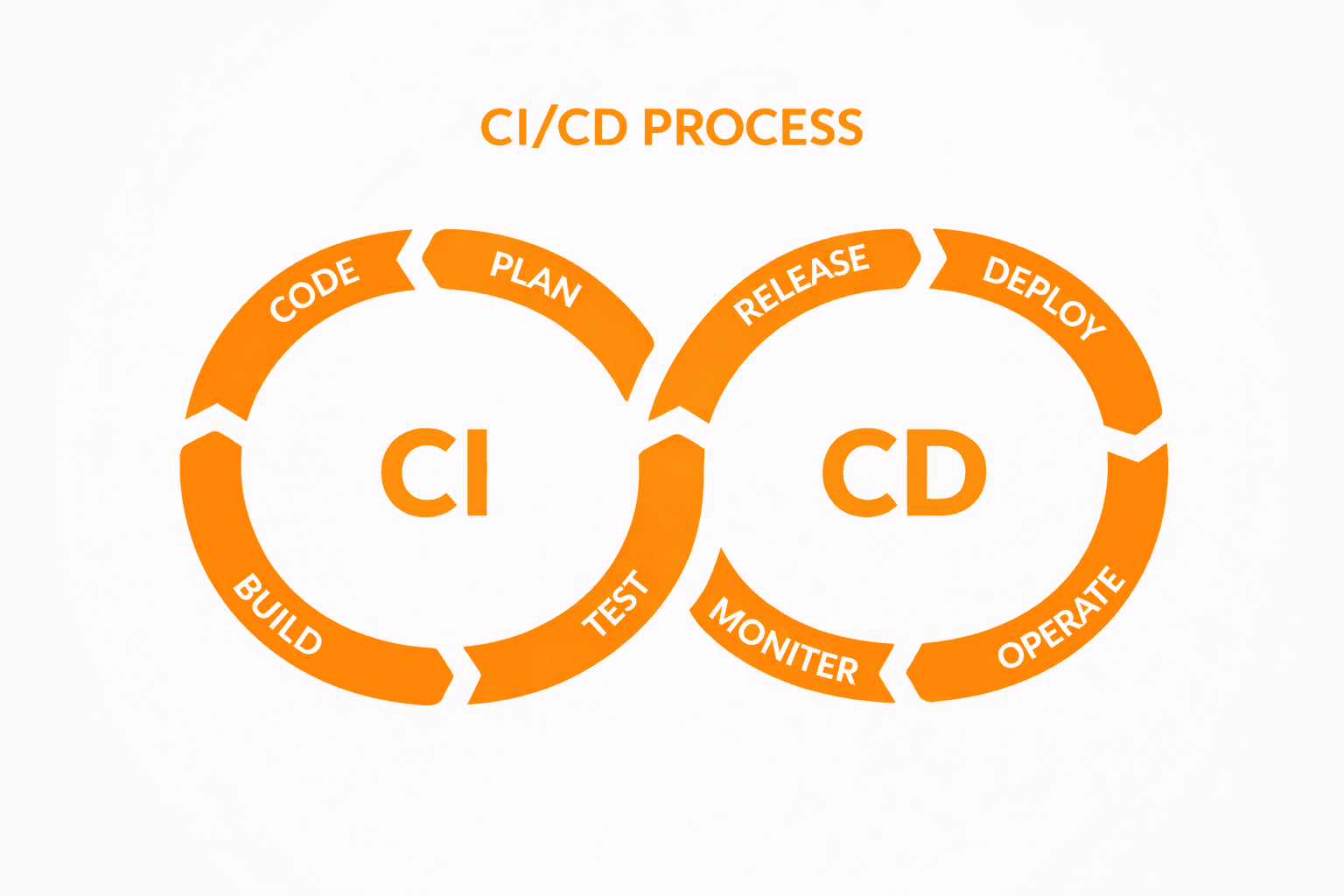
CI/CD stands for Continuous Integration and Continuous Deployment. Continuous Integration ensures that developers frequently merge code changes into a shared repository, where automated tests validate the code. Continuous Deployment then automatically releases these validated changes to production. This approach reduces integration issues, improves code quality, and enables faster delivery of features.
Key Benefits of CI/CD Automation
CI/CD pipelines significantly enhance development efficiency by automating testing and deployment processes. Teams can detect bugs early, reduce manual errors, and release updates faster. It also ensures consistency across environments, improves collaboration, and enables businesses to scale their applications with confidence.
Automating Workflows with GitHub Actions
GitHub Actions allows developers to create powerful automation workflows directly within their repositories. These workflows can be triggered by events like code pushes or pull requests. Developers can automate testing, building, and deployment processes, reducing manual effort and ensuring a smooth development lifecycle.
Containerization with Docker for Consistency
Docker simplifies application deployment by packaging code and dependencies into containers. This ensures that applications run consistently across different environments, eliminating the classic 'it works on my machine' problem. Docker containers are lightweight, portable, and easy to manage, making them essential for modern DevOps practices.
Scaling Applications with Kubernetes
Kubernetes is a powerful orchestration platform used to manage containerized applications. It automates deployment, scaling, and load balancing, ensuring high availability and performance. Kubernetes is especially useful for handling complex applications in production environments.
The Role of Automated Testing
Automated testing is a critical component of CI/CD pipelines. It includes unit testing, integration testing, and end-to-end testing. These tests ensure that new code changes do not break existing functionality, improving reliability and reducing production issues.
Modern Deployment Strategies for Zero Downtime
- Blue-Green Deployment: Deploy a new version alongside the old one and switch traffic instantly, ensuring zero downtime.
- Canary Releases: Release updates gradually to a small group of users before rolling them out fully.
- Rolling Deployment: Update services step-by-step without interrupting the system.
- Feature Flags: Control feature releases without redeploying the application.
Monitoring, Logging, and Continuous Feedback
Monitoring tools help track application performance and identify issues in real time. Logging systems provide insights into system behavior, while feedback loops ensure quick issue resolution. Integrating monitoring into CI/CD pipelines improves system reliability and user experience.
Common Challenges in CI/CD Implementation
Despite its advantages, CI/CD implementation can be complex. Challenges include managing pipeline configurations, ensuring security, handling infrastructure costs, and maintaining test reliability. Organizations must adopt the right tools and best practices to overcome these obstacles.
Future Trends in CI/CD Automation
CI/CD is evolving with AI-driven testing, predictive analytics, and intelligent automation. Future pipelines will become smarter, enabling faster decision-making, reduced manual intervention, and enhanced efficiency across development workflows.
Conclusion: Why CI/CD is Essential for Modern Development
CI/CD pipeline automation is no longer optional—it is a necessity for modern software development. It accelerates delivery, enhances quality, and empowers teams to innovate rapidly. Businesses that embrace CI/CD gain a competitive advantage by delivering reliable software faster and more efficiently.